Your knees jam into your chest on the leg press. Or your feet dangle off the bench, toes reaching for the floor. A coach tells you to "keep your chest up" and you simply can't.
The gym was built for someone in the middle. This book is for everyone else.
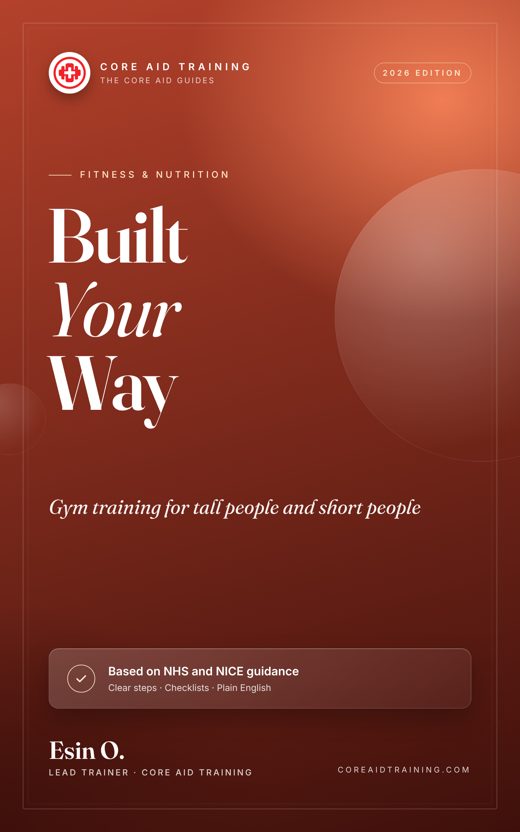
Built Your Way explains, in plain English, why tall and short bodies lift differently, and shows you exactly how to set up the gym to fit you. No jargon. No supplements. No miracle promises. Just clear, practical help based on the UK Chief Medical Officers' physical activity guidelines and NHS advice.
What is inside
- Levers and limb length explained simply, with a quick self-check
- Machine-by-machine set-up for tall bodies and for short bodies
- Squat, deadlift, bench press and pull-up versions for long or short limbs
- Back care, posture myths, mobility routines and everyday fixes
- Clothes, shoes, belts and home-gym tips for your height
- Handling height jokes, the mirror and honest expectations
- When to check with your GP or physio before you start
- Two 12-week beginner plans (tall and short) with a worked example, sample weeks, log pages and settings cards
- A first-visit plan, a "which chapters to read" finder and a quick-fix table for when a lift feels wrong
Who it is for
Adult beginners and returners, men and women, who feel too tall or too short for the gym. Short women especially, who are almost never written for.
Chapters
- Levers, limbs and why your squat looks different
- Starting safely
- Setting up any machine to fit you
- Jokes, mirrors and honest expectations
- Tall: making the machines fit
- Tall: squat, deadlift, bench and pull-up
- Tall: back care, mobility and kit
- Short: making the machines fit
- Short: squat, deadlift, bench and pull-up
- Short: back care, mobility and kit
- Your 12-week plan: tall
- Your 12-week plan: short
A sample from the book
Most gym equipment is built for a person somewhere in the middle.
Not too tall. Not too short. Arms and legs of an "average" length. A seat that goes up and down a little way. A pad that sits on the shin of someone who is about the height the designer had in mind.
If you are that person, you may never notice. You sit down, you push, you go home.
If you are not that person, you notice every single time. The seat will not go back far enough, so your knees are jammed up near your chest. Or your feet hang in the air on the bench, with only your toes touching the floor. The pad on the leg machine hits you halfway up the shin. The pull-up bar is so high you have to jump for it, or so low your knees hit the floor. A coach tells you to "keep your chest up" in the squat, and you simply cannot, no matter how hard you try.
After a while, it is easy to think the problem is you. That you are clumsy. Weak. Not made for this.
You are not. The problem is that you are being measured against a body you do not have. This book is about training the body you do have.
From the opening chapter of Built Your Way.
Questions people ask
Is Built Your Way written for the UK?
Yes. Based on NHS and NICE guidance. Phone numbers, services and the law are the UK’s, and the examples come from London training rooms.
How do I get the book?
It is a PDF. Pay by card on Gumroad and the download opens straight away, with a link emailed to you. Read it on a phone, tablet or computer, or print the pages you want.
Is this medical advice?
No. It is education in plain English, written by a first aid trainer. In an emergency call 999. For your own health, speak to your GP or NHS 111.
Can I get copies for my staff or residents?
Yes. For ten or more copies email info@coreaidtraining.com and we quote the same day.
Written by Esin O. FRSA, founder and lead trainer at Core Aid Training. Based on NHS and NICE guidance. Last reviewed November 2026.