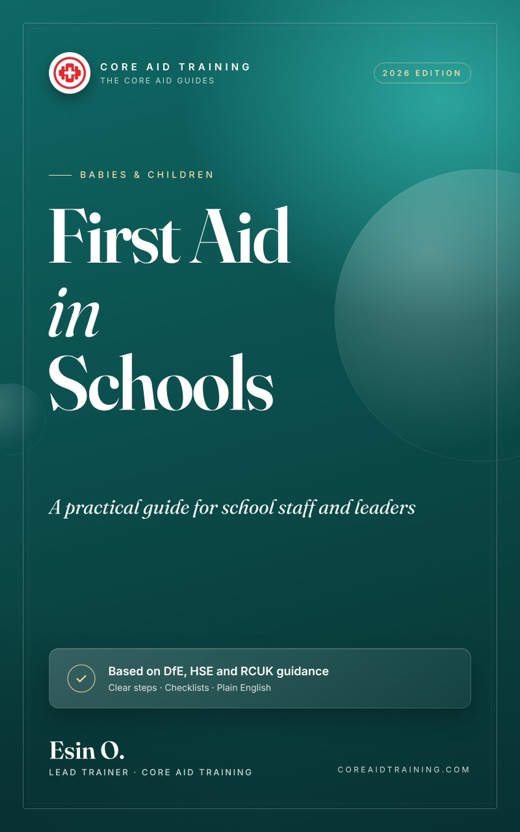
A pupil collapses on the field. A child with a nut allergy eats the wrong biscuit. A goalkeeper takes a ball to the head and seems "off" all afternoon. Would every adult in your school know what to do, and who to call?
This calm, plain-English guide helps schools in England get first aid right, from the needs assessment to the letter home.
What is inside
- What the DfE, HSE and EYFS rules actually ask of you
- A step-by-step first aid needs assessment, and how many first aiders you need
- Medical conditions, healthcare plans and the new Allergy safety in schools guidance (Benedict's Law): what applies now and what is coming
- Giving medicines safely, plus spare salbutamol inhalers and spare adrenaline auto-injectors
- Defibrillators, CPR and first aid in the curriculum
- Asthma, anaphylaxis, seizures, hypos, choking, head injuries and more, with clear advice on 999, parents or NHS 111
- Mental health crises and where to signpost pupils
- Trips, residentials, PE and concussion
- Records, RIDDOR for pupils and staff (with worked examples), talking to parents, and supporting staff after a serious incident
- Templates: needs assessment, healthcare plan outline, accident and head injury letter, trip checklist, training tracker, 999 emergency call card, termly allergy safety check and incident debrief notes
Who it is for
Headteachers, school business managers, SENCOs, teachers, TAs, first aiders, PE staff, trip leaders and governors in primary and secondary schools.
Chapters
- What the rules ask of schools
- Your first aid needs assessment
- First aiders: how many, and what training
- Supporting pupils with medical conditions
- adrenaline pens
- Defibrillators and CPR
- and choking
- Injuries: head bumps, broken bones, fainting and more
- Mental health crisis: what to do in the moment
- Trips, residentials, PE and sport
- Records, reporting and the days after
- Your school first aid toolkit
A sample from the book
A school day holds about a thousand small moments. Most of them go fine. A child trips in the playground and gets up laughing. A Year 9 pupil feels sick in maths and goes to the office for a sit-down. A reception child needs a plaster, a cuddle and a sticker.
Then, once in a while, a moment does not go fine. A boy clutches his chest after the bleep test. A girl with a nut allergy eats the wrong biscuit at a class party. A goalkeeper takes a ball to the head and seems a bit "off" for the rest of the afternoon.
In those moments, nobody in the room is thinking about policies. They are thinking: what do I do, right now?
From the opening chapter of First Aid in Schools.
Prefer to practise it with a trainer?
Reading gives you the calm explanation. A course gives you the muscle memory. Our first aid courses run on site at your school across London, with certificates emailed the same day.
Questions people ask
Is First Aid in Schools written for the UK?
Yes. Based on DfE, HSE and Resuscitation Council UK guidance. Phone numbers, services and the law are the UK's, and the examples come from London training rooms.
How do I get the book?
It is a PDF. Pay by card on Gumroad and the download opens straight away, with a link emailed to you. Read it on a phone, tablet or computer, or print the pages you want.
Is this medical or legal advice?
No. It is education in plain English, written by a first aid trainer. In an emergency call 999. For your own health, speak to your GP or NHS 111, and check official sources for the latest rules.
Can I get copies for my staff or residents?
Yes. For ten or more copies email info@coreaidtraining.com and we quote the same day.
Written by Esin O. FRSA, founder and lead trainer at Core Aid Training. Based on DfE, HSE and Resuscitation Council UK guidance. Last reviewed November 2026.